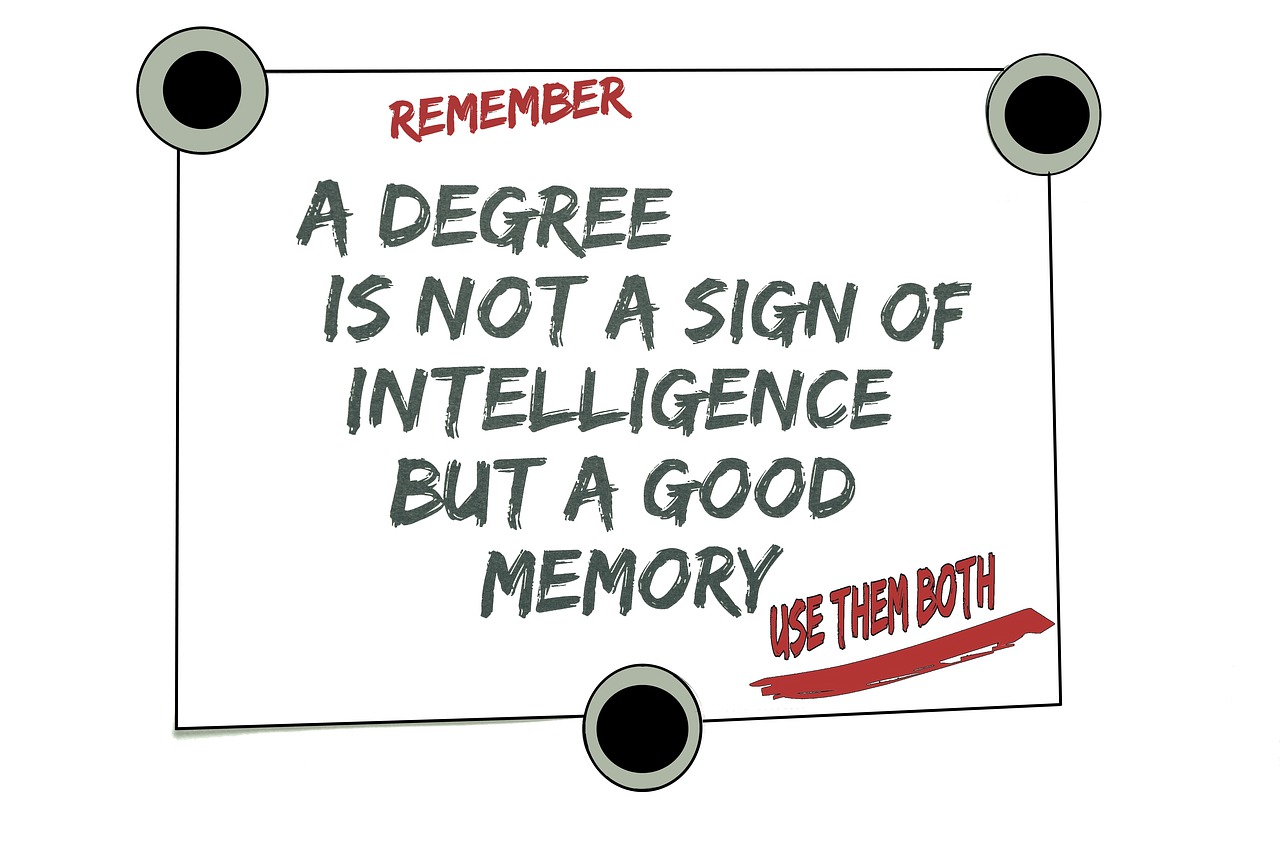
There has always been the cliché of how external education within law enforcement is often wasted or overlooked. As we look at the overall body of work of police officers all vying for promotions what really separates them from others. The various changes taking place in life pose challenges to workers of all ages with regard both to continuous learning and to the updating of competence (Hager, Brown, and Paloniemi, 2006). We can argue that experience triumphs just about everything known to man and is the only deciding factor. Although, I would have to respectfully disagree with your standpoint. When we have seen the turmoil surrounding experience not being enough for employers to support candidates once they are in office. Work experience is valued as a source of the kinds of everyday knowledge and skills needed on the job, and was described as practical and tacit (Polanyi, 1966).
Well, let us spin the table around and look at those holding an Associate, Bachelor’s, Master’s, or Doctorate degree. People take between what I can estimate at 2-10 years going through the motions of college essays and research along with trying to maintain a job to support themselves or their family. Those very people are often overlooked due to the person with experience but is it not safe to say that the academically inclined person holds some experience as well. Experience in the classroom can be just as powerful as experience out in the field although it is a controlled environment it provides adequate mental stimulation. Although it can be argued it does not remotely compare to the actual stress and mental struggle of field work pertaining to the job one is seeking which I can agree with. We have seen those holding degrees propel themselves to the top of agencies only to come crashing down due to lacking experience along with the supporting cast. In all cases, employers are presumed to select employees on educational credentials because they believe that such credentials provide information on the productive capacity of candidates that is other- wise unavailable (Bills, 1988).
Therefore, the whole package is more attractive today outside of the good-ole boy system that will never go away unfortunately. Having the perfect combination of resume attractive material with a balance of experience and education can really launch a candidate into the mix as it shows employers, they have valuable and usable abilities to reach new heights within the organization if selected. Not to disrespect the tenured guys or the super academics in any way but both sides have advantages and disadvantages that we will discuss in a later. Hiring managers must take a look at the risk reward factors each candidate brings to the table along with elements such as culture and if a change is needed or wanted along with the future of the organization. There is no clear win in this situation as everyone is divided and it will continue to be that way as to many variables are always in play.
References:
Bills, D. B. (1988). Educational credentials and promotions: does schooling do more than get you in the door?. Sociology of Education, 52-60. https://www.jstor.org/stable/pdf/2112309.pdf?refreqid=excelsior%3Aada36113d053ba53b9088dacaecfaf5b
Hager, P., Brown, T. and Paloniemi, S. (2006), “Experience, competence and workplace learning”, Journal of Workplace Learning, Vol. 18 No. 7/8, pp. 439-450. https://doi.org/10.1108/13665620610693006
Polanyi, M. (1966), The Tacit Dimension, Doubleday, New York, NY. https://books.google.com/books?hl=en&lr=&id=zfsb-eZHPy0C&oi=fnd&pg=PR6&dq=Polanyi,+M.+(1966),+The+Tacit+Dimension,+Doubleday,+New+York,+NY.&ots=HemGRHznhH&sig=xM36L48AzTwfXg6Xyfu_pXwMFtg#v=onepage&q&f=false
 Joshua Hadnot
Leave a comment