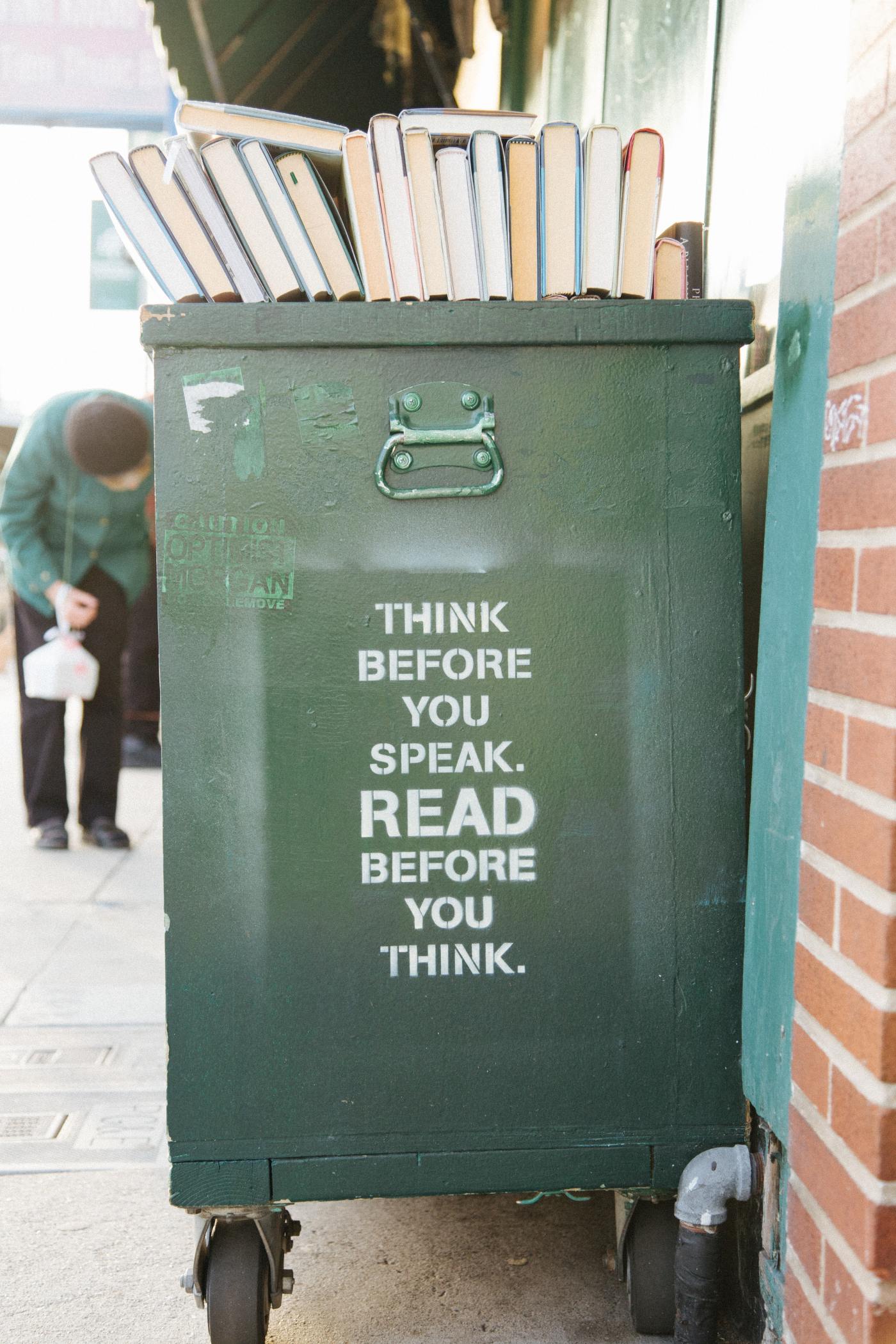
Sabbaticals are one of those rare win-win scenarios in any profession. During this gift of time away, you get the chance find new endeavors that may interest you. Find a way to build new skills and capacities that would otherwise be impossible to accomplish without dedicated time to pursue them. Along with recentering psychologically and physically in order to approach often frenetic and compressed professional work with renewed vigor. This is where, as human beings, we all must slow down and take time to think. Not just in the form of your desired profession, but in overall realm of life and the things that interest you. Strengths, weaknesses, hobbies, and areas that could sharpen underlying skills you have that need some focus to set you apart from a promotional field of qualified experienced candidates. Growth is the root here, as List (2021) mentioned that growth needs do not stem from a lack of something, but rather from a desire to grow as a person. I decided to explore the elements and faucets of critical thinking.
John List, a researcher with the University of Chicago and NBER explored a Critical Thinking Hierarchy, where from the bottom of the hierarchy upwards two key skills evolve: developing/assimilating empirical evidence to update one’s beliefs (connecting the dots with empiricism) and putting the puzzle pieces together with conceptual reasoning (connecting the dots with abstract thought). List (2021) approach is useful as it defines critical thinking, pinpoints where improvements must be made for development, and provides a playbook to enhance critical thinking skill formation.
Working in public safety and having a desire to focus on nonprofits comes a dilemma for me personally as “fast thinking” must be translated to slower thinking and weighing out decisions in totality. Because of this, the human mind tends to apply heuristics (“fast thinking”) since most of the time those work well enough, and they are much less effortful (“cheaper”) than “slow thinking” (List, 2021). As we further examine the ability of this Critical Thinking Hierarchy, which is in the form of a pyramid. The base is considered the modal thinker, second tier is the neophyte thinker, third tier is the adept thinker, as the peak is the great thinker. List (2021) explained them as follows:
-Great thinkers: High level thinkers as egocentrism is completely on the side-lines as they constantly re-examine assumptions in both thought and method of weaknesses.
– Adept thinkers: Understands their own thinking has blind spots and develops skills to address them and tries to avoid cognitive biases.
– Neophyte thinkers: Understands the importance of thinking and often confuse correlation for causation with little to no theory of mind.
– Modal thinkers: Choices and opinions based on preconceptions, prejudices, not based on reasons or facts.
For me, critical thinking is a huge element due to my desires in life. Everyone has some awareness of the limited capacity of attention, and our social behavior makes allowances for these limitations (Daniel, 2017). The very people you are around daily or simply casually associate with can alter and influence your thinking and focus. Possibly leading to distractions or assumptions that you have confirmed in your own thought process through conversation that is ideally false when additional facts are gathered. Intense focusing on a task can make people effectively blind, even to stimuli that normally attract attention (Daniel, 2017).
So, which type of thinker would you consider yourself to be in List (2021) hierarchy? Being a good leader allows for some growth from one tier to the next as stagnant thinkers only cause issues in the long run because things have to be their way or no way. Be bold and step out of your comfort zone and change the way you think!
Reference:
Daniel, K. (2017). Thinking, fast and slow. Retrieved from: http://dspace.vnbrims.org:13000/jspui/bitstream/123456789/2224/1/Daniel-Kahneman-Thinking-Fast-and-Slow-.pdf
List, J. (2021). Enhancing Critical Thinking Skill Formation: Getting Fast Thinkers to Slow Down (No. 00726). The Field Experiments Website.
 Joshua Hadnot
Leave a comment