Slow down, THINK!

Sabbaticals are one of those rare win-win scenarios in any profession. During this gift of time away, you get the chance find new endeavors that may interest you. Find a way to build new skills and capacities that would otherwise be impossible to accomplish without dedicated time to pursue them. Along with recentering psychologically and physically in order to approach often frenetic and compressed professional work with renewed vigor. This is where, as human beings, we all must slow down and take time to think. Not just in the form of your desired profession, but in overall realm of life and the things that interest you. Strengths, weaknesses, hobbies, and areas that could sharpen underlying skills you have that need some focus to set you apart from a promotional field of qualified experienced candidates. Growth is the root here, as List (2021) mentioned that growth needs do not stem from a lack of something, but rather from a desire to grow as a person. I decided to explore the elements and faucets of critical thinking.

John List, a researcher with the University of Chicago and NBER explored a Critical Thinking Hierarchy, where from the bottom of the hierarchy upwards two key skills evolve: developing/assimilating empirical evidence to update one’s beliefs (connecting the dots with empiricism) and putting the puzzle pieces together with conceptual reasoning (connecting the dots with abstract thought). List (2021) approach is useful as it defines critical thinking, pinpoints where improvements must be made for development, and provides a playbook to enhance critical thinking skill formation.

Working in public safety and having a desire to focus on nonprofits comes a dilemma for me personally as “fast thinking” must be translated to slower thinking and weighing out decisions in totality. Because of this, the human mind tends to apply heuristics (“fast thinking”) since most of the time those work well enough, and they are much less effortful (“cheaper”) than “slow thinking” (List, 2021). As we further examine the ability of this Critical Thinking Hierarchy, which is in the form of a pyramid. The base is considered the modal thinker, second tier is the neophyte thinker, third tier is the adept thinker, as the peak is the great thinker. List (2021) explained them as follows:

-Great thinkers: High level thinkers as egocentrism is completely on the side-lines as they constantly re-examine assumptions in both thought and method of weaknesses.

– Adept thinkers: Understands their own thinking has blind spots and develops skills to address them and tries to avoid cognitive biases.

– Neophyte thinkers: Understands the importance of thinking and often confuse correlation for causation with little to no theory of mind.

– Modal thinkers: Choices and opinions based on preconceptions, prejudices, not based on reasons or facts.

For me, critical thinking is a huge element due to my desires in life. Everyone has some awareness of the limited capacity of attention, and our social behavior makes allowances for these limitations (Daniel, 2017). The very people you are around daily or simply casually associate with can alter and influence your thinking and focus. Possibly leading to distractions or assumptions that you have confirmed in your own thought process through conversation that is ideally false when additional facts are gathered. Intense focusing on a task can make people effectively blind, even to stimuli that normally attract attention (Daniel, 2017).

So, which type of thinker would you consider yourself to be in List (2021) hierarchy? Being a good leader allows for some growth from one tier to the next as stagnant thinkers only cause issues in the long run because things have to be their way or no way. Be bold and step out of your comfort zone and change the way you think!

Reference:

Daniel, K. (2017). Thinking, fast and slow. Retrieved from: http://dspace.vnbrims.org:13000/jspui/bitstream/123456789/2224/1/Daniel-Kahneman-Thinking-Fast-and-Slow-.pdf

List, J. (2021). Enhancing Critical Thinking Skill Formation: Getting Fast Thinkers to Slow Down (No. 00726). The Field Experiments Website.

Think Outside The Box

The increasing importance of leadership training for leaders has been recognized by those at the forefront of leadership. Leadership is an important and crucial variable that leads to enhanced management capacity, as well as organizational performance (Sudhakar, 2013). There are numerous big named professionals hosting seminars and providing training to potential leaders as limited cost. As there are also those same people providing training within the astronomical cost range to provide what benefit. People want to be blown away and hear something they have never heard before and learn how to think outside the box. See processes and principles deployed that really alter the way people think and act within the organization. Impacting growth and performance all at the same time through simple task that leaders can complete. The skills that demonstrated the greatest change were those pertaining to thinking outside the box and process improvement (Ginzburg et al., 2018). Leadership plays a crucial role in the two factors believed to be employee satisfaction – utilizing employee skills and teamwork – developing and sustaining effective leaders for the government of the 21st century is clearly fundamental (Sudharak, 2013).

Timothy Dolan described “Leadership” as slippery, which in most cases causes people to take a step back and reevaluate things. Some are prone to make decisions that just appease themselves meanwhile others look with a wider perspective and take on the overall group feeling. There is no one-size-fits all holy grail for determining a leader though one would not know this given the claims by popular books that continue to grow in volume (Dolan, 20201). What I liked about Dolan’s book is the use of key terms and elements that prevalent today through leadership. Dolan (2018) expresses five keen powers that can be clearly displayed by leaders causing morale to buffer, splits in working relationships, and sides to chosen. Although recent discussions of followership attempts to develop behavioral typologies, understand how followers influence leaders, and highlights the characteristics that make for good, bad, and indifferent followers, follower-centric theory and research itself have primarily dealt with the likely precursor to these activities—information processing (Brown, 2018). Let’s be honest, there are some who thrive off the constant turmoil they can cause by manipulating the minds of people to get what they want or think they deserve. As they will go to great lengths to make their dreams come true at any cost. Effective leaders create positive organizational cultures, strengthen motivation, clarify mission and organizational objectives, and steer organizations to more productive and high performing outcomes (Sudharak, 2013).

Those powers are according to Dolan (2021) are:

Coercive Power – This power involves the usage of threats to make people do as one desires.

Reward Power – Using rewards and perks to influence people, although it poses other implications because not all promises can be fulfilled due to other people being involved.

Legitimate Power – Translates to the position one holds, lower positions hold less power and higher positions hold more.

Expert Power – This power is personal and associated with the individual and their expertise or skills which brings more credibility and respect.

Referent Power – This power translates to movie stars and other celebrities as they have a huge following and use their power to influence people in other ways.

As Dolan (2021) mentioned, the new perspective on leadership looks to the capacity of a leader to utterly change the organizations entire culture. Let’s take the likes of leaders such as Thomas Edison and Henry Ford, or better yet Bill Gates, Steve Jobs, and Elon Musk. Each of these individuals had the ability, skills, and influence to change their respective times. Organizational and societal transformation involves paradigm shift, but in practice may often be better described as quantum accretion and diffusion from many indeterminate sources that lead to a tipping point (Dolan, 2021).

Despite the disproportional predominance of leader-centric leadership research, which emphasizes the systematic variance in the influence process due to leader characteristics, far less attention has been devoted to followers (Brown, 2018). What exactly is it that followers want from leaders? Truth, openness, respect, integrity, and fairness are all valid elements. Most of which heavily relates to why followers behave in exotic ways at times or determine that leaders are untruthful, selfish and possessive. If one understands why followers behave as they do, a necessary first step is in understanding their thought processes (Brown, 2018). Do not treat human beings as possessions or easily replaceable assets. There is always a social cost when human beings are reduced to the level of commodities (Sudharak, 2013). Also, leaders must have the desired of credentials and competencies necessary to do the desired job and merge the personnel together toward a desired goal. Specific skills, specialized knowledge demands and attributes that are considered to be important in performing tasks to the required standards underpin competencies (Sudharak, 2013).

Leadership must be more about the people versus gaining the authority and power that one secretly seeks. Leaders must think outside the box in each aspect of their duties to find creative ways to not only keep the ship moving in the right direction, but also appreciate employees who have given their life to the profession. Thinking outside the box can pose some severe benefits if done properly and given the desired attention. Remaining stuck in the ways of the similar effective systems can cost you years of advancement along with good qualified candidates seeking employment elsewhere. I encourage you to step outside of your comfort zone and think outside the box and see how it can benefit you. Get away from the good ole boy system and back room handshake deals, and move toward a progressive way of life where previous history, qualifications, skills and training mean more. The potential to miss out on something great could be lost, so think outside the box.   

References:

Brown, D. J. (2018). In the minds of followers: Follower-centric approaches to leadership. In J. Antonakis & D. V. Day (Eds.), The nature of leadership (pp. 82–108). Sage Publications, Inc.

DOLAN, T. E. (2021). THE EVOLUTION OF LEADERSHIP THEORIES. Leadership for the Future: Lessons from the Past, Current Approaches, and Future Insights, 2.

Ginzburg, S. B., Deutsch, S., Bellissimo, J., Elkowitz, D. E., Stern, J. N., & Lucito, R. (2018). Integration of leadership training into a problem/case-based learning program for first-and second-year medical students. Advances in medical education and practice9, 221.

Sudhakar, D. (2013). QUALITY OF LEADERSHIP IN THE PUBLIC SECTOR COMPANY’SCHALLENGES AND ITS STRATEGIES. International Journal of Multidisciplinary Educational Research. Editorial Board, 128.

Broadband: Rural Dilemma

As much as I love living in a rural area where the animals run free, the pastures stretching as far as the eye can see, and randomness runs at large. The apparent downfall to this pleasantry is the constant and infamous ability to either be without cellular service or broadband at any given moment. The importance of Internet in our lives today cannot be overemphasized (Thakur & Prasad, 2021). This week alone has been by far very complicated for businesses and citizens alike as many go to social media to express their displeasures with their internet providers or the communications company. Rural areas deserve the same attention and dedication to service as the bigger urban areas in my opinion, but the issue is how do we get government entities and other to realize that and provide the infrastructure to complete this dream.

As of 2019, over 20 million Americans—predominantly those living in rural areas—lacked access to high-speed broadband service according to the Federal Communications Commission (FCC) (Humphreys, 2019). The numbers have greatly changed since this data was collected but it does not change the devastating impact that broadband or the lack thereof has on rural areas. Having lived in a bigger city before, I can only imagine how wide the impact is. Although, with local governments stretching themselves out and providing Fiber access at a cost to citizens which generates revenue for the local government. I often wonder how long that can sustain itself, as several Texas cities have stepped outside the box provided access points throughout their parks, downtown areas, and business districts. Ensuring customers do not have to go far to stay connected to their friends and family but also share their life experiences on the spot through social media platforms. Those with favorable geography and demographic profiles often have higher demand, and thus present relatively attractive investment opportunities, for broadband providers (Humphreys, 2019). This situation leaves majority of the rural people unconnected thereby creating a massive rural urban digital divide (Thakur & Prasad, 2021).

Other programs to support broadband buildout to schools, clinics, and other community institutions have improved access for residents of rural areas, but it is not clear that these programs have affected overall market demand (Humphreys, 2019). The local school board decided to provide MiFi devices to students, which was a huge advantage unless the devices were not as strong or useful at the residence of the child. All kids deserve to have the same level of education provided and I commend the board and district for making this decision giving students a chance to succeed in some of the toughest times they have faced. Following this decision came the distribution of tablets which further sustained the idea that technology is the primary mean of survival when face to face contact is taken away from us. Parents often had to step up and strictly monitor their child’s work as other called on the government to help sustain education. Living in rural areas can have penalties when broadband companies do not reach your area, the MiFi device cannot find a signal, and the assignments of your child are due as their graduation chances hinge on critical moments.

However, the penetration of cellular network is limited in rural areas as its deployment becomes unviable due to challenges such as low average revenue per user, sparse population density, and intermittent availability of electricity (Thakur & Prasad, 2021). Government entities have a lot of things being pushed onto their plates as they must tread lightly in addressing them all. I believe they can have a strategic plan laid out for rural areas that can be beneficial to most Texans without a large economic impact such as taxation or other citizen focused burdens. Options for congressional consideration include measures to address obstacles to adoption and additional incentives for private sector investment in the rural broadband sector (Humphreys, 2019). Congress may also consider measures to encourage broadband providers to increase investment in persistently underserved rural areas and more aggressively develop nascent broadband markets (Humphreys, 2019).

It is 2021 and we are way beyond the point of settling for average broadband and cellular services. Technology is autonomously sending spaceships into orbit and landing them on another planet, producing driverless vehicles, and so many more other attributes that society can thrive from. Although we cannot figure out a way to sustain the very thing that gives parents peace of mind when their kids are away, connects countries on opposite ends of the globe, and sustains the way of life. Communications and the systems that drive them must be improved and focused on at higher levels than local level to truly thrive. With a focus on maintenance, upgrades, and external testing to ensure that Americans are provided the best available options at communicating internationally.

References:

Humphreys, B. E. (2019). Demand for broadband in rural areas: Implications for universal access. CRS Report46108.

Thakur, K. K., & Prasad, R. (2021). Wi-Fi for Affordable Broadband & 5G in Rural Areas. Journal of Mobile Multimedia, 225-244.

Making the Most of the Moment: Nonprofit

Being in public service is something that at a young age I was very curious about as to what all they could do. What I mean by that is, how broad could the efforts of first responders be in giving back to their respective communities. When tragedy strikes, we see those very brave men and women, volunteer groups, and other citizens coming from all over the world to help those they do not know and have never met. Long before my time in public service there was a nonprofit group started that was focused on giving back to the community through engagements and other efforts to increase the quality of life through outreach opportunities. I have been fortunate to be a part of that same organization, the Jasper Police Association (JPA), which is a 501(c)(3).

Nonprofit organizations are essential in providing goods and services to the under-resourced in the community (Love, 2018). There is always a need of some kind, you just must go out and find it as it may not be clear or apparent. Knowing where to look can often come with highs and lows, but at the end of the day it is simply about giving back to the community without bias. Annually the Jasper Police Association operates a Christmas toy drive called “Toys for Tots” with the Marine Toys for Tots Foundation. Collectively we wanted to do more and sought other avenues to try and accomplish that goal. The Christmas toy drive for disadvantaged kids is a huge success each year as donors from hundreds to thousands of miles away call and send us donations to propel the program. We could not do the good work that God has allowed us to do without the help of generous people throughout this great nation. Fundraising is an essential for the survival of the society when there is a low support from the government (Maqbool et al., 2019). These funds do not touch the pockets of any members of this association and are strictly regulated by the board of directors.

Expanding our outreach was obviously the easy part since social media is so powerful. Creating pages and other fundraising opportunities really allowed us the opportunity to interact with those people not from our area. Nonprofit organizations have invested in the development of content for their Facebook pages, believing be an efficient and effective means to publicize its mission and raising resources, whether monetary or human (Laureano et al., 2018). National Night Out is another gathering that was eliminated due to COVID-19 where we can bring in every agency to one location. There is free food and games for kids and the chance to meet our local first responders and form lasting relationships that go beyond any legal encounters that may have happened in the past.

Whether it is floods on the east coast, hurricanes in the Gulf or some other natural disaster. Jasper Police Association stands ready to fill the gap for those in need of the basic items to maintain human life. Our local partners such as Lowes, Walmart, Brookshire Brothers, Aaron’s, DuGood Federal Credit Union, Little Caesar’s, MVPs, and Elijah’s Café go above and beyond to help us fulfil those generous efforts that impact others. I encourage those in the nonprofit industry to take the next step in building those relationship with others with a focus on helping those beyond your reach. Nothing can be accomplished alone as we all need someone to lend a helping hand at some point in life. We strive to make the most of the moments allotted to us to impact the lives of someone in need. It is simply rooted in being kind, no rocket science, formulas, or fancy schematics can accomplish this. As it starts in the heart and translate to outward actions that move without seeking recognition or praise.

References:
Laureano, R. M., Fernandes, A. L., Hassamo, S., & Alturas, B. (2018). Facebook satisfaction and its impacts on fundraising: a case study at a Portuguese non-profit organization. Journal of Information Systems Engineering and Management, 3(1), 04.


Love, K. C. (2018). “Nonprofit Fundraising Strategies to Provide Quality Sustainable Services”. Walden Dissertations and Doctoral Studies. 4869.
https://scholarworks.waldenu.edu/dissertations/4869


Maqbool, N., Razzaq, S., Ul Hameed, W., Atif Nawaz, M., & Ali Niaz, S. (2019). Advance Fundraising Techniques: An Evidence from Non-Profit Organizations. Pakistan Journal of Humanities and Social Sciences, 7(1), 147-157.

Identity: Officer’s Struggle

Having been apart of the profession for quite some time now, the one general element remains paramount in each new officer. The idea and aspects of self-identification and how they would like their character, work ethic, and performance to be viewed. Everyone has a supervisor in this profession just like others, therefore the potential for oversight and impactful relationships can only go so far. At some point it is solely up to the officer to determine which direction they would like to go based on what they have experienced or been told by the infamous Field Training Officer. These rigorous programs have great benefits that are often overlooked but can also pose great downfalls if newly hired and inexperienced officers are not guided properly. A hint of free advice, the Field Training Program is not the time to decide of the officer is up to standards or not. Those things should be filtered out through the hiring process, which saves organizations from grief later. Also, it is not only about the badge and profession but a lifestyle that one must live based on respect, empathy, and discretion.

I have watched officers be hired fresh from the academy or even other agencies and have a tough time adjusting to what the profession is truly about. This being based off the environment of the department and how norms are entrenched. Every department has their own culture, so the landscape is not all the same at every department in case you were thinking that. New or lateral officers are not only trying to fit in but ultimately are not trying to mess up to the point of embarrassment or corrective action. They should be sponges trying to find that mentor to ask questions of, learn from without ridicule, and potentially emulate their career after. In the sense of the lateral hire with more experience they should be trying to wash away bad old habits while keeping an open mind to develop new habits. We all have had someone that impacted our career early on of midways through, who we have tried remained close to or mirrored our careers after. Anyone can bark orders, stick their chest out and proclaim to be the best. Along with telling people where to go and what to do, but it takes true leadership and patience to be able to show someone how to do things while not being afraid to be held accountable even in your ranking position. While having the acumen to admit you were wrong or do not know what or how to do something.

News flash: Positions of authority do NOT mean you know everything. As that brings about another element for new officers trying to develop an identity.

Shortcuts, there is always someone trying to shortcut some process because they think or feel that the real way of doing it is bizarre and meaningless. FTO’s please do not show trainees shortcuts as that teaches them nothing while creating a habit that can manifest into something bigger. Forcing administrators to question the ability of trainers along with processes or customs of completing work assignments.

Question: Are you providing the desired type of environment for officers to develop their identity?

Communication plays a huge part in developing an identity and if officers who complete their training program are lacking in this area it will show quickly as citizens will be able to identify it. The way officers talk to citizens regardless of them being in custody or not plays a dividend in the relationship that will come back around eventually. Sir Robert Peel expresses it best explaining how the community is one as officers and those who violate the law all the live under the same circumstances and must find a way to live together in harmony. That person whom an officer just used profanity toward, engaged in a physical altercation with, or simply treated with respect will spread that information. Officers develop identities through the community and their peers just as quickly. Therefore, officers try to be firm, fair, and consistent with everyone versus being bias, confrontation, and rude. Even in the worst situation when things have gone bad, the mere presence of the officer and way he/she reacts to those situations goes well beyond the years. Often things are rushed because officers feel they should show up on scenes arrest everyone or anyone for violating the law, show their authority to verbal interactions or force, and then mentally justify their actions. These very things are what have given law enforcement the global identity it has subtly earned in 2021. Every interaction is not a confrontation, but these elements should go beyond natural field training of learning the job. These are intangible elements that officers should be briefed on and FTO’s should be observant of to help grow the officer.

Throughout my career I have chosen to place myself mentally into the shoes of those we encounter even in bad situations while understanding tough decisions must be made. Respect is something that can be freely given without someone having to earn it through random acts. I choose to respect the indigent person just the same as I would the business owner. There is no rule or hidden formula that I have found or been told of that equates respect is generated through power and force or a badge and authority given by the State of Texas. Bad situations can be diffused by mutual respect and integrity the officer has earned amongst the community through his/her interactions. I believe officers around the country can attest to relationships building even through tough times with citizens has shown its potential in solving difficult cases that had grown cold. We need the community in which we are responsible for policing to help us in times of need to bring closure and help provide justice to those who cannot speak for themselves. Therefore, the develop of a police officer’s identity is critical and must be given oversight and attention to detail. The deliberate teachings and relationships both professional and personal that are developed along with the constant citizen interaction will help newly acquired officers tremendously. People speak about reform on major scales, which I not completely against, I just believe that we can start reforming our mindsets and cultures within the profession to create a better tomorrow today.

Setting Up for Success

First and foremost, allow me to apologize for my absence over the past several months. The focus has been on research that literally consumed my every thought. Nevertheless, the thoughts have still been flowing as we all sit and watch the various avenues within our society divide us whether it be politics, leadership, stock market, or something different. In examining these aspects, there comes a time when success must be paramount for not only oneself but the industry or organization providing the service. Setting yourself up for success is critical in today’s business world but also can benefit you personally if done correctly. I strongly believe that humans often forget that we all are capable of learning something new and acting on that new knowledge to assist others or provide innovative approaches in our respective professions. Success can be heavily related to habits whether big or small, although we all know about the attention to details. This blog will focus on the tiny habits that are related to long term acts that most professionals can relate to being: collaboration, culture, camaraderie, community, and consistency. Just a quick hint, there is no order in which these should be focused on. The goal is to intertwine them all equally thus elevating the potential for success.

I previously read a book authored by B. J. Fogg where the discussion was completely about tiny habits. Fogg (2019) mentioned how everyone wants to make changes whether to get healthier, lower stress, or work better. All of which are habits we all struggle with daily, but rarely uphold ourselves due to the conscious habits we have grown accustomed to. Tiny allows you to get real with yourself and your life. Tiny allows you to start right now (Fogg, 2019). Focusing on our first habit of collaboration, we must self-reflect to get the thoughts moving around. Nothing in life is obtained alone or without the assistance of another party. In collaborating often those who consider themselves product may prefer to work alone due to the responsibility issues. Working with others is what aids leaders and followers alike in learning about their colleagues’ while being able to learn from them. Obviously, collaboration leads us over into the culture of the organization and how much collaboration is encouraged. Culture has the ability in what Fogg (2019) explained as growing big if managed properly and given the proper attention. I like to describe this practice as the wellbeing of the organization. Moreover, important factors for the perception of wellbeing include social interactions, value and meaning at work, a good social atmosphere (Ekbladh, 2010), being accepted, being respected, and receiving support from coworkers (Gunnarsdottir & Björnsdóttir, 2003).

The so-called golden ticket is based on camaraderie in any organization or for a better description morale within the organization. As trust and friendships amongst people who basically spend more time together than with family members these elements must also come with ideal habits. I believe it is safe to say that no person wants to work in an environment that erodes trust, is high in conflict, and low in relationships that build lasting friendships. I understand that not everyone we work with will find a meaningful friendship as the basis for this habit is solely about environment. Now, having the ability to go to dinner and lunch with coworkers always establishes a level of friendship and trust that can be built upon because those settings are less formal and more about the intrinsic elements of life, happiness, and hobbies. Although, a sense of community operates along the same guidelines but allows leaders to focus on those events outside of work. The workplace is an essential source of social capital for many people; it provides mutual support and gives meaning to life (Rydström et al., 2017). Developing a community within the workplace should be personal and fueled by an altruistic individual. So, be sure to show others gratitude as a genuine thank you from a leader is bound to start internal conversations. Just be sure to follow up with support that is spread across every level of the organization. As that ties back into the ability to collaborate while building up a culture and enhancing camaraderie.

Doing all of those on a consistent basis is where the difficulty come into the equation. Everyone is entitled to having a random bad day at the office where tensions are high whether it be because of deadlines, marital issues, or budgetary items. Consistent behavior is something that leaders overlook and undervalue because they subsequently think or feel it ok to be bipolar in the workplace and carrying unnecessary burdens to the office. Even in the sense of defeat or setbacks, leaders are tasked with being the calm voice in the room and thinking of ways to develop practices and approaches to overcome obstacles while remembering to have a personality. Employees know there are problems as they are in the arena with you regardless of how bad they are. The workplace is an important social arena, and many people find their identity through work (Rydström et al., 2017). There is no one size fits all but there is meaning in effort and positive reinforcements through celebrations of great things such as birthdays, weddings, and just gathering to simply socialize. It is at work that many important social relationships are created and maintained (Ekbladh, 2010).

With the ability to focus on the tiny habits that relate to collaboration, culture, camaraderie, community, and consistency. I strongly believe that leaders are not only setting the organization up for success but also the personnel that work within it. Laying a foundation and then building it up with good habits is exactly how great things are accomplished. Even in the remote setting where employees are spread out these same principles can be implemented and show results. Leaders should be able to practice and facilitate these factors that hold potential for the work environment to turn into something that others strive for or wish they had. Employees want to work in environments that fosters something besides the mission and vision. No disrespect to those aspects, but the real jewels are the employees and until leaders realize that then things will continue to remain the same. Good employees will leave, bad employees will stay thinking are the solution to the problems, and the leaders will continue to wonder how to resolve certain issues. Here is a solution, first find a mirror and ask yourself what are you doing to make things the best they can be. Then, add others to the conversation that are on the front lines while keeping certain core values or characteristics at the top of what the consensus environment is. Finally, implement those aspects and follow up with progress and remain consistent.       

References:

Ekbladh, E. (2010). Perceptions of the work environment among people with experience of long term sick leave. Work35(2), 125-136.

Ekbladh, E. (2010). Return to work: the predictive value of the worker role interview (WRI) over two years. Work35(2), 163-172.

Fogg, B. J. (2019). Tiny habits: The small changes that change everything. Eamon Dolan Books.

Gunnarsdottir, S., & Björnsdóttir, K. (2003). Health promotion in the workplace: the perspective of unskilled workers in a hospital setting. Scandinavian journal of caring sciences17(1), 66-73.

Rydström, I., Englund, L. D., Dellve, L., & Ahlstrom, L. (2017). Importance of social capital at the workplace for return to work among women with a history of long-term sick leave: a cohort study. BMC nursing16(1), 1-9.

Qualified Immunity

On the heels of the tragic loss of George Floyd, law enforcement in general has sustained numerous amounts of criticism. Rightfully so but as a reminder the actions of those Minneapolis officers along with the latest actions in Atlanta this past week where Rayshard Brooks was killed do not justify labeling all police officers. Ideally the biggest thing to recently come out is the elements of qualified immunity and how they relate to public safety and other government officials. Its development in the Supreme Court has been marked by ad hoc decision-making, conflicting rationales, and a high degree of doctrinal manipulation (Rudovsky, 1989).


Some people believe that qualified immunity is for rogue cops to get away with acts that clearly violates a person’s constitutional rights. Well what about the good cops who just so happen do all the right things and still must face scrutiny for their actions even if deemed justified by a jury or seated magistrate. I find it puzzling how Rep. Justin Amash (I-MI), has quickly launched a proposal to legislation that would completely abolish qualified immunity altogether. There are previous case law rulings that go in depth about qualified immunity and even goes as far as establishing elements that a reasonable person would have known. Qualified immunity protects government officers from liability for money damages where the violated constitutional right was not “clearly established” (Harlow v. Fitzgerald, 1982). It is a good read as it talks about the discretionary functions and the shielding from liability for civil damages, although conduct of those involved must be adequate and not in question during the incident. Qualified immunity does not eliminate the burden of cities having to go through litigation and subsequently decide to settle the suit short of going to court. Wrongdoing by any official only opens the agency and city for litigation but does not mean that a person’s constitutional rights were automatically violated.


I do not believe that any judge seated on the Supreme Court or any other court would willingly turn a blind eye to such evidence of clearly violated constitutional rights to declare qualified immunity. Not only is that a violation of their ethical and moral codes as being sworn to uphold the law in all regards that could pose great impact on the other decisions handed down regarding such behavior. If the defendant’s conduct was “objectively reasonable” (Anderson v. Creighton, 1987) in light of the existing legal principles governing the particular area, qualified immunity protects officials against damages (Rudovsky, 1989). As we witnessed the recent declining by the Supreme Court to hear cases that challenge officers’ qualified immunity. In doing this job for over a decade I find that decision to be acceptable as officers take an oath of office to uphold the law and follow the law accordingly. I understand that well over 50 years have passed since this topic has been visited, but is changing this element going to render the sanctions necessary to rebuild in a positive manner? I applaud Chief Justice John Roberts for acknowledging that “baby steps” are vital in this aspect versus these big immediate changes that are being pushed out. The future is brighter especially taking into account all the factors that are going on currently but we all must be patient and continue to move toward the goal of a true reform where accountability, transparency, and patience reign supreme not conspiracies and far fetched ideas that have no sustainable facts or evidence to support them.

Reference:
Anderson v. Creighton, 483 U.S. 635, 640-41 (1987). Qualified immunity is not a defense to injunctive actions. https://supreme.justia.com/cases/federal/us/483/635/

Harlow v. Fitzgerald, 457 U.S. 800  https://supreme.justia.com/cases/federal/us/457/800/

Rudovsky, D. (1989). “The Qualified Immunity Doctrine in the Supreme Court: Judicial Activism and the Restriction of Constitutional Rights”. Faculty Scholarship at Penn Law. 1507. https://scholarship.law.upenn.edu/faculty_scholarship/1507

Reform With a Purpose

As the country goes through intense moments of solidarity, the foundational principles of how WE as a nation landed in this position still blows me away. Obviously as a police office I went through the same training in the academy and Field Training programs just as every other officer has to do. Never have I heard any instructor or academy director condone illegal or senseless tactics that knowingly cause death. The actions of those officers in Minneapolis do not depict the mentality or character of every police officer around the country. Although, it is a tragedy that their action and inaction ultimately cost George Floyd his life. We must find a way to overcome this tragedy with solutions that can be proven and trusted to be sustainable. Policing is inherently controversial, and police work is extraordinary challenging. There are higher expectations, greater scrutiny, and more calls for accountability of the police in the twenty-first century than ever before (Brandl, 2019). Watching the internal war take place on American soil is not only disheartening but also damaging to those young officers who thought that this career path was for them. It should not have come to this but like every law enforcement leader I have spoken to, we are here now and must do something about it to bridge the gap.

Moving forward is not going to be easy as protest whether peaceful or not will be taking place amid politicians and other community leaders searching for the right words to say that remain neutral and unbiased to the average person. Although if broken down generally pick a side as being on the fence is not acceptable. As an African American male and police officer, I completely understand where the tension and distrust stems from just from watching several incidents around the country unfold via the news media and having worked through a few myself. The media tends to focus on negative incidents by highlighting the bad or questionable conduct of a few officers. Although there are certainly lessons to be learned from such incidents, these images and stories can provide an inaccurate overall picture of the police (Brandl, 2019). Each case is different but I believe that generally, they all settle into four vital categories that show change is more important now than ever before and we must take action regardless of our beliefs. Who does not want a better tomorrow for their kids, grand-kids, and other family or friends who will live through these times long after we have moved on in life. The four key areas are:

  • Support
    • Improved training (Use of Force, diversity, racial profiling, deescalation)
    • Body cameras (mandated with grant funding available)
    • Programs that build relationships with the community and create dialogue
  • Transparency
    • Policies and procedures
    • Civilian review boards
    • Make disciplinary action public record
  • Barriers
    • Police Militarization (explain certain equipment and purpose)
    • Stop and Frisk, Search Warrants (Knock/No knock), Probable Cause
    • Racial disparities (Publish UCR and other data for the organization to the community)
  • Communication
    • Community oriented policing
    • Accountability

In examining this list of four areas law enforcement leaders can focus on, none of them appear to be outside the norm. The double edge sword is showing this type of openness consistently with the community and not running to hide or give minimal information when tragedy strikes. Relationships are multifaceted and require an initiator which I strongly believe should be law enforcement and the receivers being the community as a whole. Support, transparency, lowering mitigation of barriers, and open communication can really go a long way in improving relationship between the police and community. Defunding law enforcement agencies is not the way to approach a true reform effort as it takes funding in order to get the organization in the best position to succeed and provide results for council members and commissioners to see. Although community wide reform and finding ways to fund other programs that place different cultures and ethnicity groups together in a room is an awesome idea as it starts the process but there is an abundance of opportunities before us right now as a nation that we must capitalize on.

Having a purpose for the reform process is going to make huge dividends for every community across the nation if navigated properly. Blindly going about it is not providing justice or peace for communities that are hurting and in need of immediate changes to the current system. Law enforcement leaders must not be offended by their practices possibly changing and view it as beneficial to the organization and community. President Trump recently signed an executive order back in January 2020 that most do no know exist to establish the Presidential Commission on Law Enforcement and the Administration of Justice – the first commission on law enforcement in half a century according to the United States Department of Justice website. In my opinion the commission is a great start although the items on the agenda do not address any of the issues related to the current state of policing. Hopefully President Trump and the members of the Commission go back and revisit this list to update it and provide some reform methods.

There will be some law enforcement officers who just do not agree with the change and will feel attacked and betrayed or even as if they are being treated like animals. Well guess what, in these difficult times we have buckle down like never before and push through it together. It is ok to be angry and hurt by how we are portrayed, but the calls still have be to answered and people still need want us around to protect and serve them. Being stubborn and used to the old way of doing things is a thing of the past, it’s time to make changes and move forward diligently together with the people we took a sworn oath to protect and serve. Reform must start with those dawning the badges as I would love to sit on any council or board constructed to help navigate us through these times.

Reference:

Brandl, S. G. (2019). Police in America. SAGE Publications, Incorporated. https://books.google.com/books?hl=en&lr=&id=T_C9DwAAQBAJ&oi=fnd&pg=PP1&dq=police+reform+in+america&ots=1ekh-GVIrl&sig=wzRzi558VxcMd39CSE2PjoZ0AJE#v=onepage&q=police%20reform%20in%20america&f=false

https://www.justice.gov/ag/presidential-commission-law-enforcement-and-administration-justice

Education or Experience???

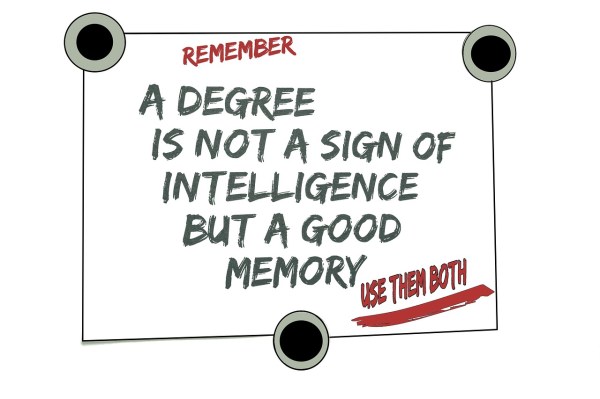
There has always been the cliché of how external education within law enforcement is often wasted or overlooked. As we look at the overall body of work of police officers all vying for promotions what really separates them from others. The various changes taking place in life pose challenges to workers of all ages with regard both to continuous learning and to the updating of competence (Hager, Brown, and Paloniemi, 2006). We can argue that experience triumphs just about everything known to man and is the only deciding factor. Although, I would have to respectfully disagree with your standpoint. When we have seen the turmoil surrounding experience not being enough for employers to support candidates once they are in office. Work experience is valued as a source of the kinds of everyday knowledge and skills needed on the job, and was described as practical and tacit (Polanyi, 1966).


Well, let us spin the table around and look at those holding an Associate, Bachelor’s, Master’s, or Doctorate degree. People take between what I can estimate at 2-10 years going through the motions of college essays and research along with trying to maintain a job to support themselves or their family. Those very people are often overlooked due to the person with experience but is it not safe to say that the academically inclined person holds some experience as well. Experience in the classroom can be just as powerful as experience out in the field although it is a controlled environment it provides adequate mental stimulation. Although it can be argued it does not remotely compare to the actual stress and mental struggle of field work pertaining to the job one is seeking which I can agree with. We have seen those holding degrees propel themselves to the top of agencies only to come crashing down due to lacking experience along with the supporting cast. In all cases, employers are presumed to select employees on educational credentials because they believe that such credentials provide information on the productive capacity of candidates that is other- wise unavailable (Bills, 1988).


Therefore, the whole package is more attractive today outside of the good-ole boy system that will never go away unfortunately. Having the perfect combination of resume attractive material with a balance of experience and education can really launch a candidate into the mix as it shows employers, they have valuable and usable abilities to reach new heights within the organization if selected. Not to disrespect the tenured guys or the super academics in any way but both sides have advantages and disadvantages that we will discuss in a later. Hiring managers must take a look at the risk reward factors each candidate brings to the table along with elements such as culture and if a change is needed or wanted along with the future of the organization. There is no clear win in this situation as everyone is divided and it will continue to be that way as to many variables are always in play.

References:

Bills, D. B. (1988). Educational credentials and promotions: does schooling do more than get you in the door?. Sociology of Education, 52-60. https://www.jstor.org/stable/pdf/2112309.pdf?refreqid=excelsior%3Aada36113d053ba53b9088dacaecfaf5b

Hager, P., Brown, T. and Paloniemi, S. (2006), “Experience, competence and workplace learning”, Journal of Workplace Learning, Vol. 18 No. 7/8, pp. 439-450. https://doi.org/10.1108/13665620610693006

Polanyi, M. (1966), The Tacit Dimension, Doubleday, New York, NY. https://books.google.com/books?hl=en&lr=&id=zfsb-eZHPy0C&oi=fnd&pg=PR6&dq=Polanyi,+M.+(1966),+The+Tacit+Dimension,+Doubleday,+New+York,+NY.&ots=HemGRHznhH&sig=xM36L48AzTwfXg6Xyfu_pXwMFtg#v=onepage&q&f=false

Start Somewhere!

In thinking about starting this blog to generally cast thoughts and questions to peers. The far-fetched idea of how deep this blog could get along with the potential impact it could have for those having the same thoughts but unable to clearly communicate them was phenomenal. Obviously, I have been so dedicated to the elements of leadership and studying the principles of it from various professional sources whom I will not mention. Little is known about access to leadership development opportunities (Haddad, 2020). Therefore, over the past 6 years I have solely dedicated my life to learning as much about leadership as possible. Notice I said learning that has nothing to do with me portraying to be a know it all, but more less a dedicated student of the terminology and principles.

Education is something that some people will frown upon others for getting, whether it is another degree in a subject or pursuit of something larger than themselves. Which my journey in leadership is exactly that, a true mixture of both education and the pursuit to deliver a value driven approach to leadership. From the countless conferences and other networking events that I have been able to attend, the driving theme is that it did not start overnight. An increasing number of studies point to student gains from participation in leadership development opportunities (Haddad, 2020). None of the big name leaders that we admire and emulate woke up one day and knew everything. They had to study the craft and pour in countless hours daily to it thus going beyond the average call for duty.

I had the privilege of meeting John C. Maxwell at Church of the Highlands where the Pastor is Chris Hodges during the Grow Conference. From that brief 30-45 second exchange I was inspired to do more for others more so than before. As that is what truly pushed me to start this journey of blogging while dedicating it to the profession of law enforcement while trying to highlight elements of leadership. Komives, Owen, Longerbeam, Mainella, and Osteen (2005) mentioned the development of individual leadership identity that can lead to established self-awareness and self-development, which increases self-confidence, application of new skills, and enhanced motivations. Hopefully by making this leap WE can change some of the cultures and norms that are heavily entrenched within the profession. I understand it is going to be tough, but I am dedicated to the plan to turn this blog into something more than I imagined with the help of others.

References:

Haddad, B. (2020). ACCESS TO LEADERSHIP EFFICACY: Those Who Start Early Finish Ahead. Journal of Leadership Education19(2), 76–85. https://doi.org/10.12806/V19/I2/R6

Komives, S. R., Owen, J. E., Longerbeam, S. D., Mainella, F. C., & Osteen, L. (2005). Developing a leadership identity: A grounded theory. Journal of College Student Development, 46(6), 593-611. https://doi:10.1353/csd.2005.0061

Blog at WordPress.com.

Up ↑